Easy Chicken Pad Thai Recipe- Flavorful Thai Stir-Fry
Chicken Pad Thai is more than just a dish; it’s an explosion of vibrant flavors and tantalizing textures that transports you straight to the bustling street food stalls of Thailand. Have you ever wondered what makes this classic noodle stir-fry so universally adored? It’s that perfect harmony of sweet, sour, salty, and a hint of spicy, all coming together in a symphony of taste that dances on your palate. The chewy rice noodles, the tender chicken, the crunchy peanuts, and the fresh bean sprouts create a delightful textural contrast in every bite, making each mouthful an adventure. What truly elevates this Chicken Pad Thai from simply delicious to utterly irresistible is the unique tamarind-based sauce, a secret ingredient that lends an unmistakable depth and complexity. Get ready to embark on a culinary journey as we unlock the secrets to creating your own authentic Chicken Pad Thai right in your own kitchen. Prepare to impress yourself and your loved ones with this incredibly satisfying meal!
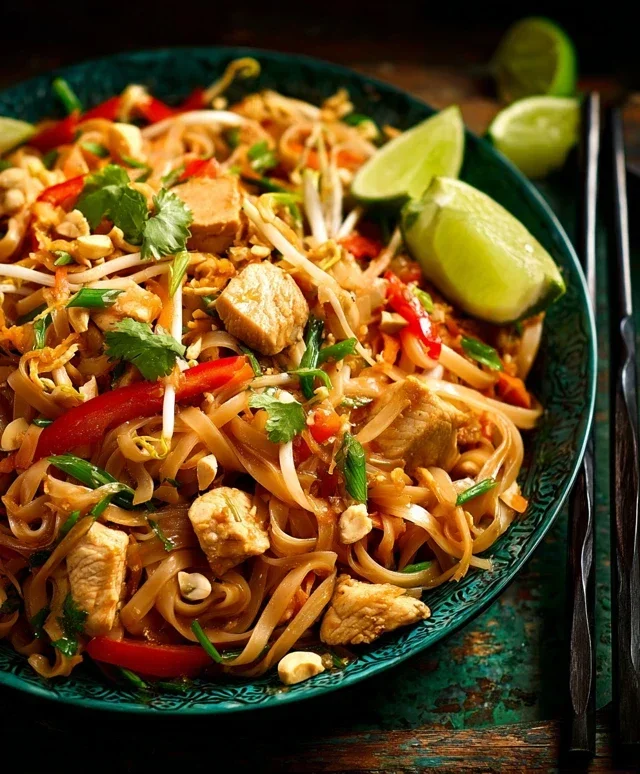
Chicken Pad Thai Dish
There’s something incredibly satisfying about a plate of vibrant, flavorful Pad Thai. This classic Thai stir-fry is a symphony of sweet, savory, sour, and a hint of spice, all brought together by slippery rice noodles. While it might seem intimidating to make at home, I promise you, with a little preparation and these straightforward steps, you’ll be whipping up restaurant-quality Pad Thai in your own kitchen. The key is to have all your ingredients prepped and ready to go before you even turn on the stove, as the cooking process itself is quite rapid. Let’s get started!
Ingredients:
Prepping Your Ingredients: The Key to Success
Before we dive into the cooking, let’s get everything ready. This is arguably the most crucial step for a successful Pad Thai.
Making the Pad Thai Sauce
In a small bowl, whisk together the brown sugar, soy sauce, rice vinegar, chili garlic sauce (or sriracha), and the juice of one lime. This is your flavor powerhouse. Taste it and adjust the sweetness, saltiness, sourness, or spiciness to your liking. Some people prefer it sweeter, others tangier, so don’t be afraid to experiment! Set this sauce aside.
Preparing the Noodles
Follow the package instructions for your Thai rice noodles. Typically, you’ll soak them in hot (not boiling) water for about 15-20 minutes until they are pliable but still have a slight bite. Be careful not to overcook them, as they will continue to cook in the stir-fry. Once they are ready, drain them thoroughly and toss them with a tiny bit of oil to prevent them from sticking together.
Chopping and Slicing
Ensure your chicken breasts are sliced thinly against the grain for maximum tenderness. Slice your red bell pepper into thin strips. Chop your green onions, separating the white parts from the green. Have your chopped peanuts and fresh cilantro ready for garnishing.
The Cooking Process: A Fast and Furious Stir-Fry
Now that everything is prepped, it’s time to bring it all together. The actual cooking time is quite short, so be ready to move!
1. Searing the Chicken
Heat 1 tablespoon of oil in a large wok or a large, deep skillet over medium-high heat. Add the sliced chicken and stir-fry until it’s cooked through and lightly browned. This usually takes about 5-7 minutes. Remove the cooked chicken from the wok and set it aside on a plate. This step ensures the chicken is perfectly cooked and doesn’t get mushy in the final dish.
2. Scrambling the Eggs
Add the remaining 1 tablespoon of oil to the same wok, ensuring it’s hot. Pour in the beaten eggs. Let them cook for about 30 seconds without stirring, then gently scramble them until they are just set. Break the scrambled eggs into smaller pieces and push them to the side of the wok. This creates little pockets of fluffy egg goodness throughout your Pad Thai.
3. Adding the Vegetables and Noodles
Add the sliced red bell pepper, matchstick carrots, and the white parts of the green onions to the wok. Stir-fry for about 2 minutes until they are slightly tender but still have a bit of crunch. Now, add the drained rice noodles and the cooked chicken back into the wok.
4. Coating with Sauce and Stir-Frying
Pour the prepared Pad Thai sauce over everything in the wok. Using tongs or spatulas, gently toss and stir-fry everything together for 3-5 minutes. The goal is to coat every strand of noodle and every piece of chicken and vegetable evenly with the sauce. Keep stirring and tossing until the noodles are tender and the sauce has thickened slightly and is absorbed. Don’t be afraid to let the noodles get a little caramelized at the bottom of the wok – it adds fantastic flavor!
5. The Final Touches and Serving
Just before you’re ready to serve, toss in most of the bean sprouts and the green parts of the green onions. Stir-fry for another minute, just enough to wilt the sprouts slightly. You want them to retain some of their crispness. Divide the Pad Thai among serving plates. Garnish generously with the chopped peanuts and fresh cilantro. Serve immediately and enjoy the incredible flavors!
Making Pad Thai at home is a truly rewarding experience. The aroma that fills your kitchen as you cook is simply divine, and the taste is even better. This recipe is a fantastic base, and you can customize it further by adding other vegetables like broccoli florets or snap peas, or even shrimp for a surf-and-turf twist. Enjoy your delicious homemade Chicken Pad Thai!
Conclusion:
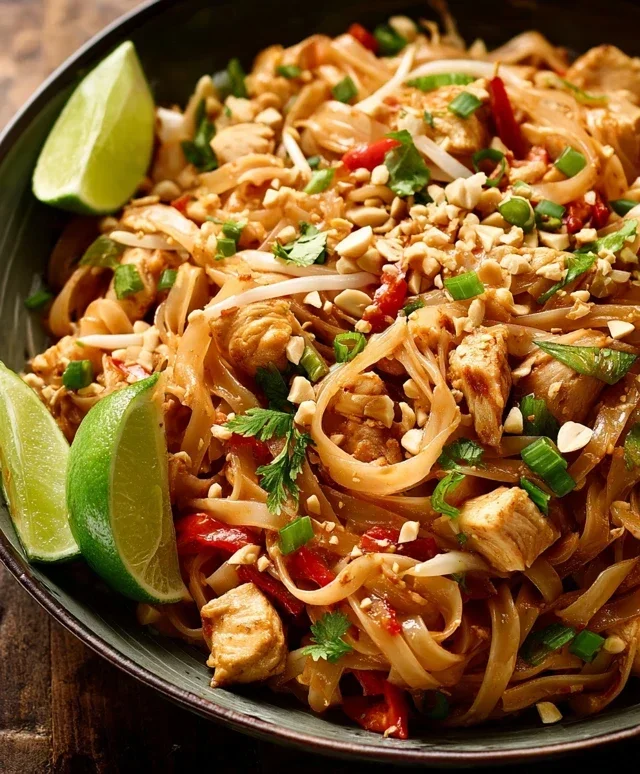
And there you have it! You’ve now got the blueprint to create a truly authentic and incredibly delicious Chicken Pad Thai right in your own kitchen. This recipe is a winner because it balances that perfect sweet, sour, and savory flavor profile that Pad Thai is famous for, with tender chicken and satisfying noodles. It’s versatile enough for a quick weeknight meal or impressive enough for guests. Serve it piping hot, garnished generously with fresh cilantro, crushed peanuts, and a wedge of lime for that authentic zest. Don’t be afraid to experiment! You can easily swap the chicken for shrimp, tofu, or even add more vegetables like broccoli or bean sprouts for extra crunch and nutrition. I truly encourage you to give this Chicken Pad Thai a try – you’ll be amazed at how rewarding it is to recreate this beloved Thai classic!
Frequently Asked Questions:
What if I can’t find tamarind paste?
If tamarind paste is hard to come by, you can create a good substitute by mixing about 2 tablespoons of lime juice with 1 tablespoon of brown sugar. While not exactly the same, it will give you a similar sweet and sour element. You might need to adjust the sugar to your taste preference.
Can I make this spicier?
Absolutely! For a spicier kick, you can add a pinch of red pepper flakes to the sauce mixture or serve with sliced fresh chilies on the side. You can also incorporate some sriracha or chili garlic sauce into the final stir-fry.
What kind of noodles are best for Pad Thai?
The classic noodle for Pad Thai is dried flat rice noodles, often labeled as “Pad Thai noodles.” They absorb the sauce beautifully and have the perfect chew. If you can’t find those, linguine or fettuccine can be a decent substitute, but the texture will be slightly different.
Chicken Pad Thai Dish
A classic and flavorful Thai stir-fried noodle dish made with chicken, vegetables, and a sweet and savory sauce.
Ingredients
-
6 tablespoons brown sugar
-
6 tablespoons soy sauce
-
2 tablespoons rice vinegar
-
4 teaspoons chili garlic sauce or sriracha sauce
-
Juice of 1 lime
-
12 ounces Thai rice noodles
-
1.5 pounds chicken breasts, sliced into thin strips
-
2 tablespoons oil, divided
-
3 eggs, beaten
-
1 red bell pepper, sliced thin
-
2 cups bean sprouts
-
1 cup matchstick carrots
-
2 green onions, chopped
-
1/4 cup peanuts, chopped
-
Cilantro, for garnish
Instructions
-
Step 1
In a small bowl, whisk together brown sugar, soy sauce, rice vinegar, chili garlic sauce (or sriracha), and lime juice. Set aside the sauce. -
Step 2
Cook Thai rice noodles according to package directions. Drain and rinse with cold water to prevent sticking. Set aside. -
Step 3
Heat 1 tablespoon of oil in a large skillet or wok over medium-high heat. Add the sliced chicken and stir-fry until cooked through, about 5-7 minutes. Remove chicken from the skillet and set aside. -
Step 4
Add the remaining 1 tablespoon of oil to the skillet. Pour in the beaten eggs and scramble until cooked. Break into pieces and set aside. -
Step 5
Add the sliced red bell pepper and matchstick carrots to the skillet and stir-fry for 2-3 minutes until slightly tender-crisp. -
Step 6
Return the cooked chicken and scrambled eggs to the skillet. Add the cooked rice noodles and the prepared sauce. Toss everything together until well combined and heated through, about 3-5 minutes. -
Step 7
Stir in the bean sprouts and chopped green onions. Cook for another minute until the bean sprouts are slightly wilted. -
Step 8
Serve immediately, garnished with chopped peanuts and fresh cilantro.
Important Information
Nutrition Facts (Per Serving)
It is important to consider this information as approximate and not to use it as definitive health advice.
Allergy Information
Please check ingredients for potential allergens and consult a health professional if in doubt.